
Fractional Laser Resurfacing in Lafayette, LA
Acne scars, rough texture, sun damage, wrinkles, and changes in overall skin quality often require more than a surface-level treatment. At Elle Medical & Aesthetics, non-ablative fractional laser resurfacing in Lafayette, LA uses Candela Nordlys® technology to create controlled microscopic treatment zones within the skin, stimulating renewal while preserving untreated skin between each zone to support recovery.
With both 1550 nm and 1940 nm fractional wavelengths available, treatment can be customized according to what is happening at different depths of the skin. The 1550 nm wavelength works more deeply to address concerns such as acne scarring, wrinkles, and textural irregularities, while the 1940 nm wavelength works closer to the surface to address epidermal resurfacing, brown pigmentation, and rough texture associated with sun damage. Crystal Fontenot, ANP-BC, selects the wavelength based on the concern being treated and may use both during the same session for appropriate candidates.
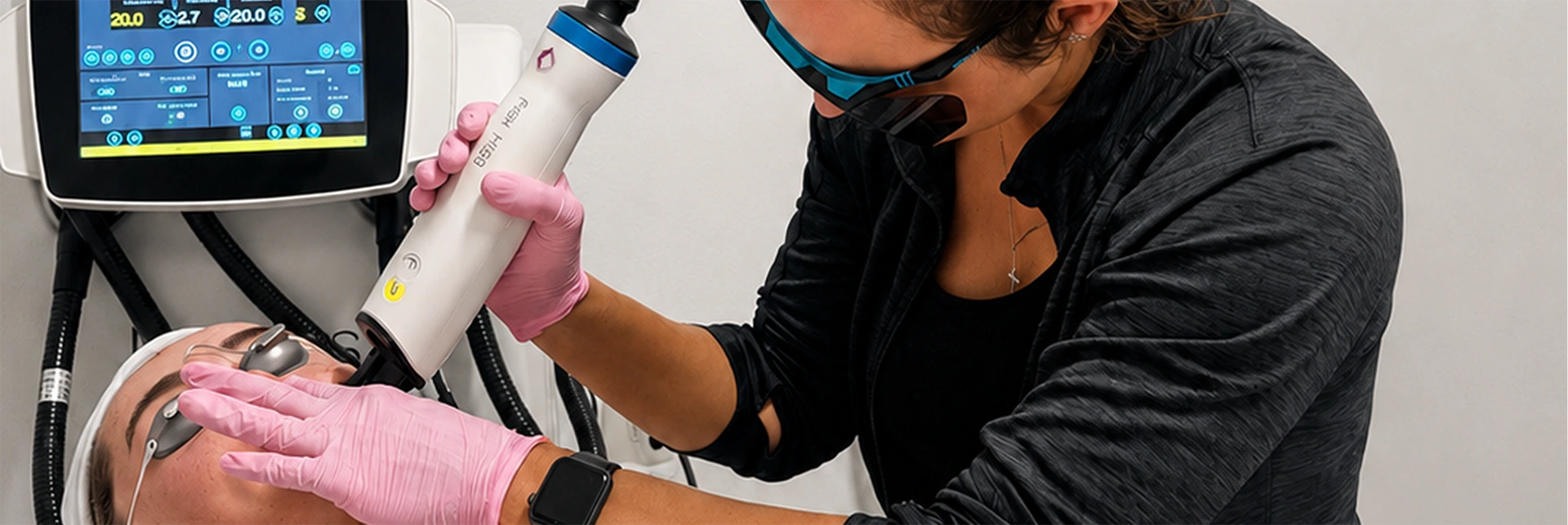
What Is Non-Ablative Fractional Laser Skin Resurfacing?
Non-ablative fractional laser resurfacing treats a fraction of the skin at a time rather than removing or treating the entire skin surface. The laser creates thousands of microscopic columns of controlled thermal injury while leaving areas of surrounding skin untouched.
These untreated areas serve as a reservoir of healthy cells that help the treated columns recover. Beneath the surface, the controlled thermal response also initiates a remodeling process that supports new collagen formation and gradual improvements in skin quality.
Because the treatment is fractional and non-ablative, recovery is generally measured in days rather than the longer healing period associated with more aggressive ablative resurfacing. The intensity and wavelength are still carefully selected according to skin type, treatment goals, and individual healing considerations.
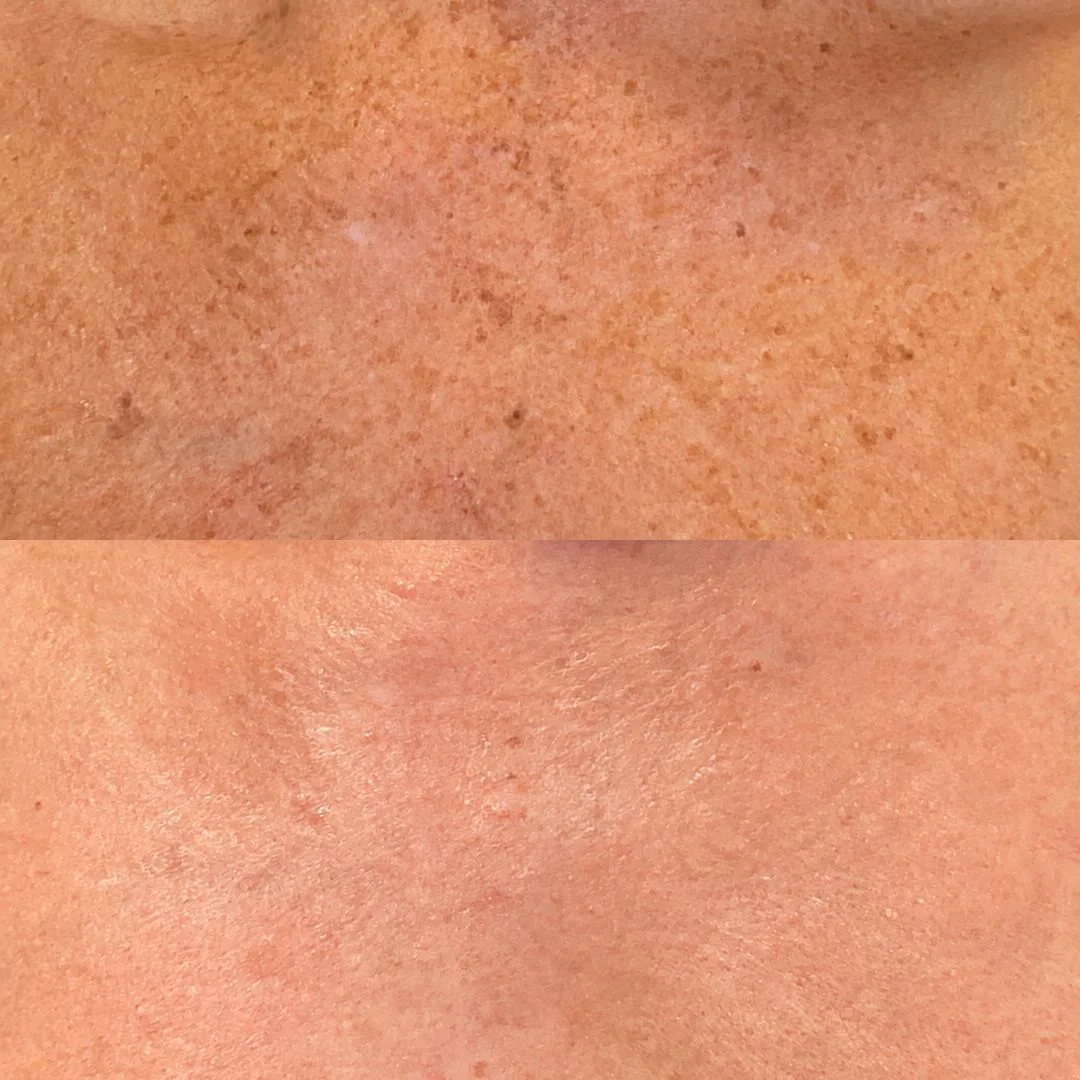
How Does Fractional Laser Resurfacing Work?
Fractional laser resurfacing creates microscopic treatment columns at controlled depths within the skin. Rather than treating every part of the skin uniformly, the laser leaves untreated tissue between these columns, helping the skin recover while the treated areas undergo renewal.
At Elle Medical & Aesthetics, the Candela Nordlys® platform gives Crystal access to two fractional wavelengths that perform different roles. This allows her to choose treatment depth based on the actual problem instead of treating every concern with one fractional laser.
Frax 1550 for Deeper Skin Remodeling
The 1550 nm wavelength penetrates more deeply into the skin and is used when structural skin quality is the primary concern. It may be selected for acne scarring, wrinkles, textural irregularities, and concerns that require deeper remodeling.
By creating controlled thermal columns below the surface, the treatment initiates a healing response and collagen remodeling that continues after the visible recovery period has ended.
Frax 1940 for Pigment and Surface Texture
The 1940 nm wavelength works closer to the skin’s surface, making it useful for epidermal resurfacing. Crystal may select this wavelength when brown pigmentation, rough surface texture, or visible sun damage is a significant part of the concern.
For patients who have both deeper textural changes and more superficial pigmentation, the two wavelengths may be incorporated into the same treatment plan. Crystal can also use both during one session when appropriate.
What Can Fractional Laser Resurfacing Treat?
Fractional laser resurfacing is especially useful when the concern involves skin texture, scarring, pigmentation, or visible changes associated with aging and sun exposure. The ability to choose between two treatment depths allows the procedure to be tailored according to the underlying concern.
Fractional laser resurfacing may be used to improve the appearance of:
- Acne scars
- Uneven or rough skin texture
- Fine lines and wrinkles
- Brown pigmentation
- Sun damage
- Textural irregularities
- Dull or weathered-looking skin
- Changes in overall skin quality
- Selected superficial pigmentation
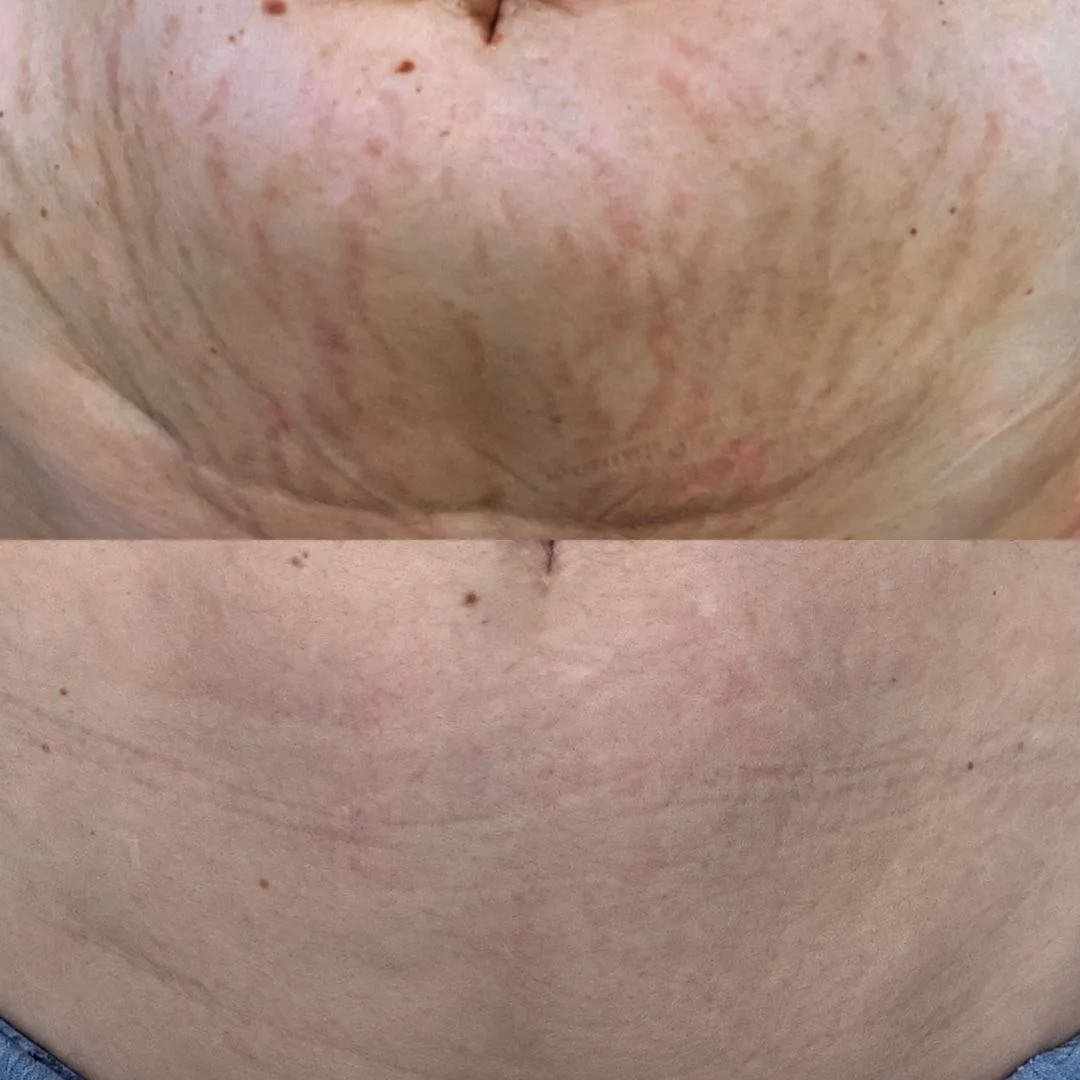
- Skin-quality changes following significant weight loss
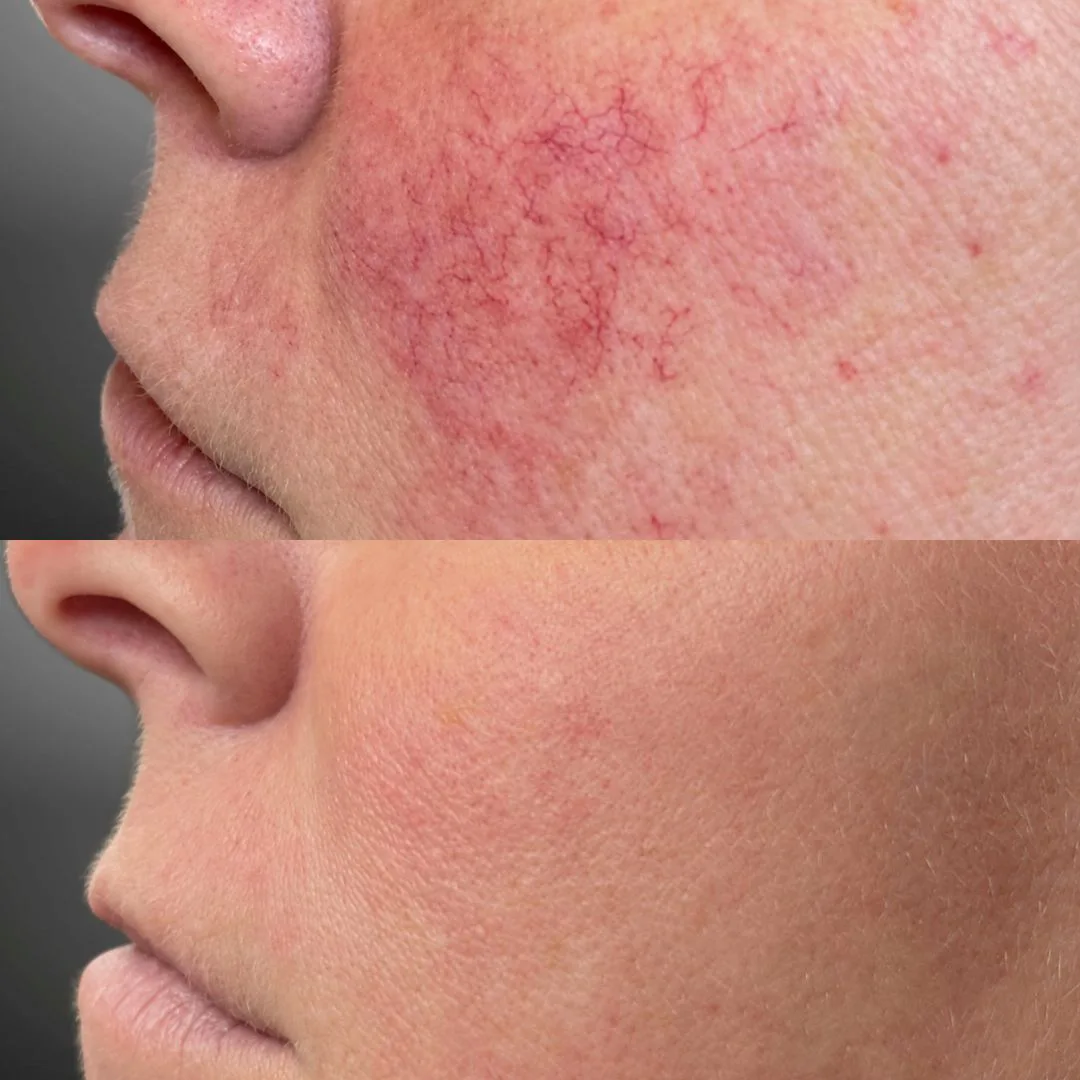
When pigmentation or redness is the primary concern rather than resurfacing, Crystal may recommend a different technology. Elle also offers Laser Skin Rejuvenation and targeted laser treatments that can be selected according to what is actually contributing to the concern.
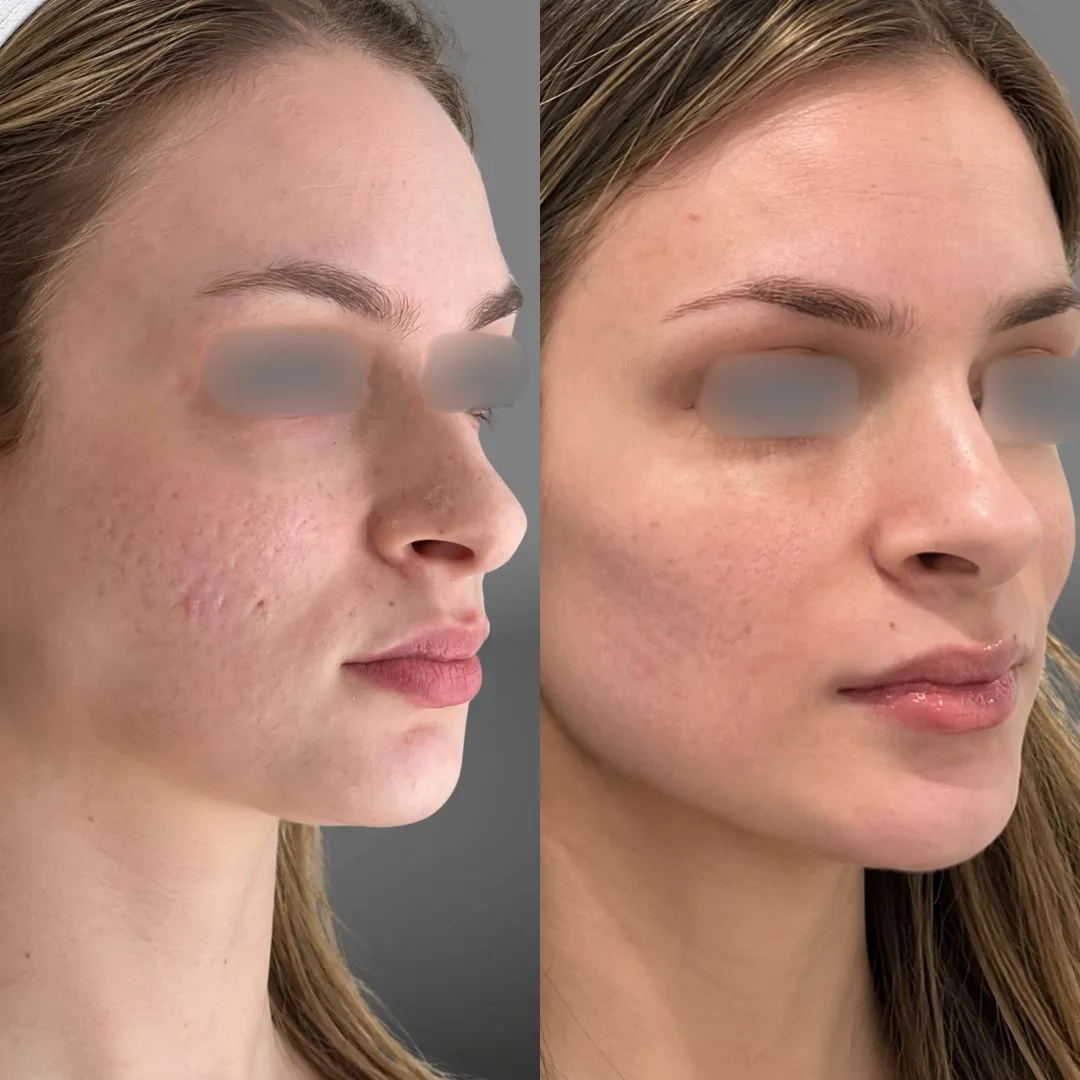
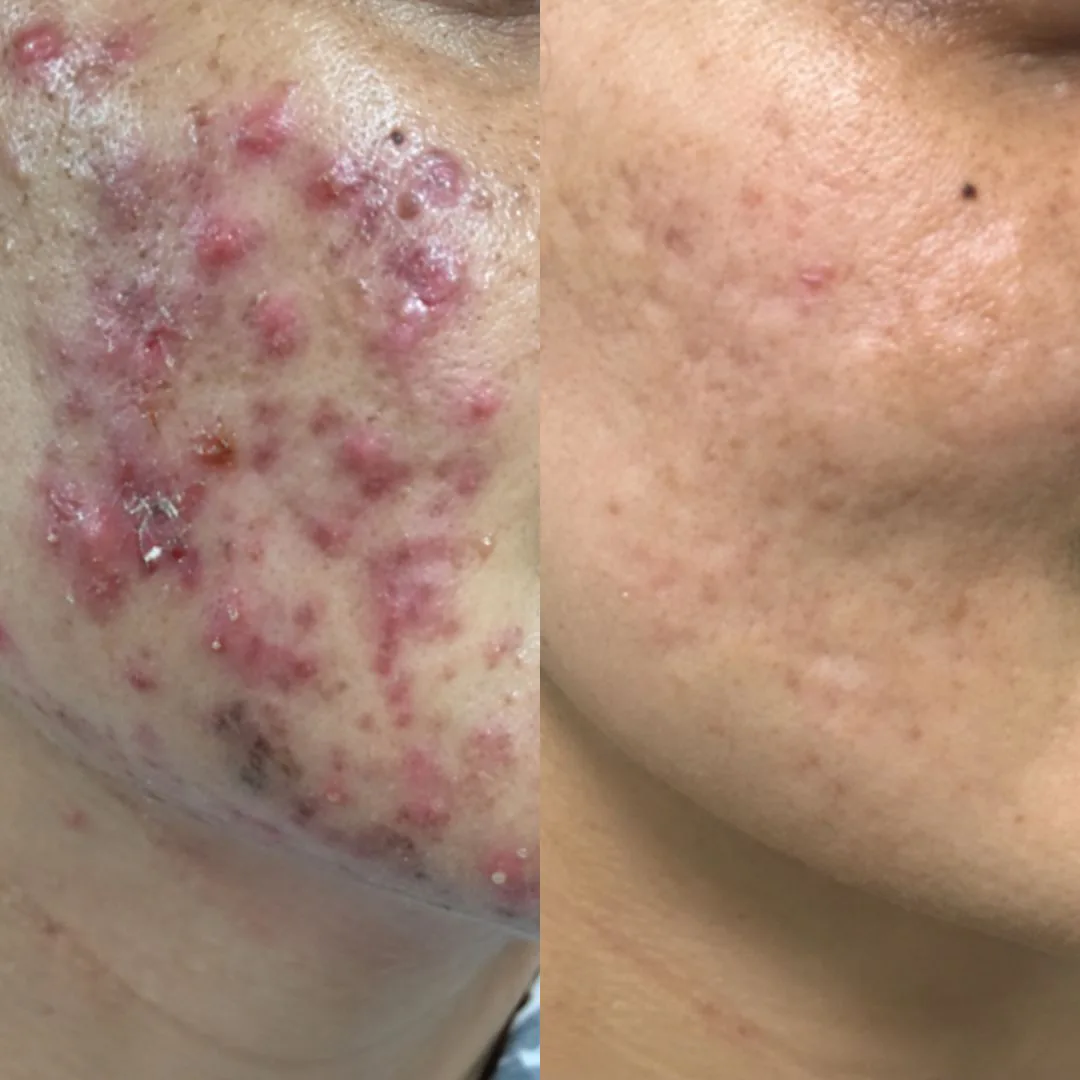
Fractional Laser Resurfacing for Acne Scars and Uneven Texture
Acne scarring can leave depressions and irregularities that remain long after active breakouts have resolved. Because these changes involve the structure of the skin, simply treating the surface may not adequately address the textural component.
The deeper 1550 nm wavelength allows Crystal to target the structural quality of the skin and stimulate remodeling within areas of textural irregularity. As collagen remodeling occurs, the skin can gradually develop a smoother, more refined appearance.
Not every acne scar requires the same approach. Scar pattern, depth, skin type, healing history, and previous treatments all influence treatment selection. Microneedling may also be considered for certain texture and scarring concerns, and Crystal can determine which approach is more appropriate during consultation.
Fractional Laser Resurfacing for Sun Damage and Brown Pigmentation
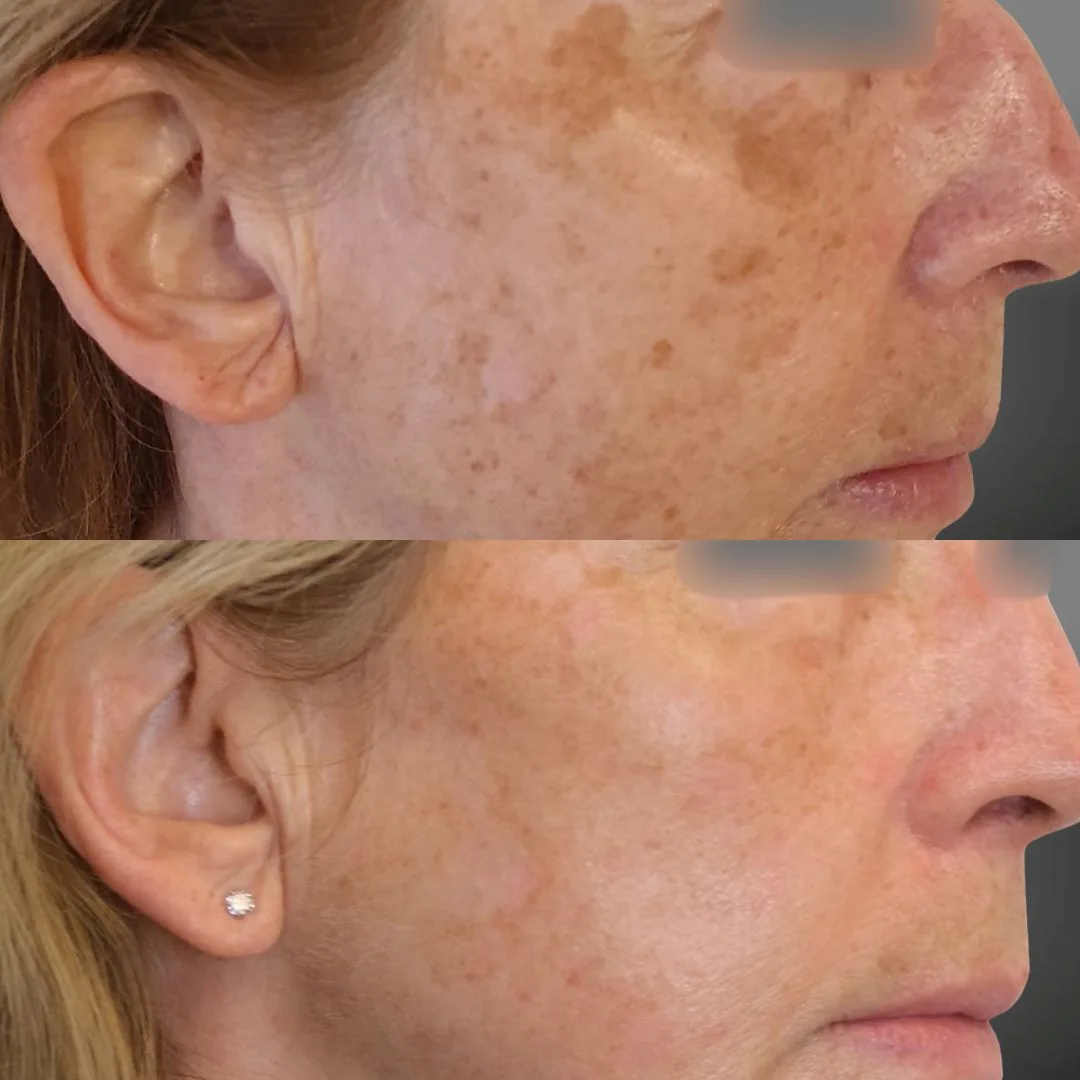
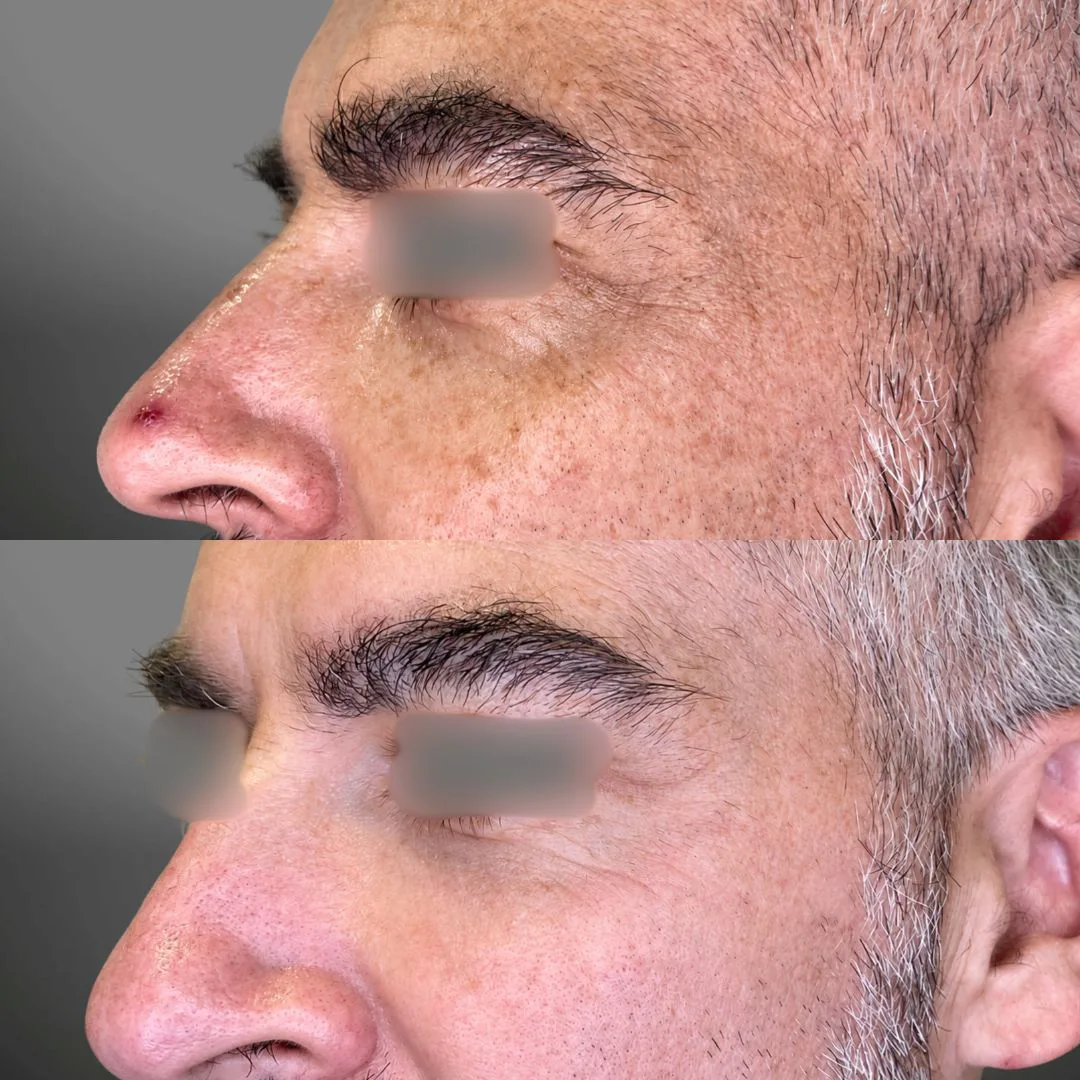
Years of sun exposure can leave the skin looking rough, uneven, and visibly pigmented. When these changes are concentrated closer to the skin’s surface, the 1940 nm wavelength provides a more superficial fractional resurfacing option.
The 1940 nm wavelength can address epidermal resurfacing, brown pigmentation, and the rough surface texture associated with sun damage. As the treated skin turns over following the procedure, these superficial irregularities can gradually become less noticeable.
If pigmentation is the dominant concern without significant textural changes, Crystal may instead recommend Elle’s Laser Pigment & Rosacea Treatment or another targeted approach. Treatment selection depends on the type and depth of pigment rather than assuming every brown spot should be resurfaced.
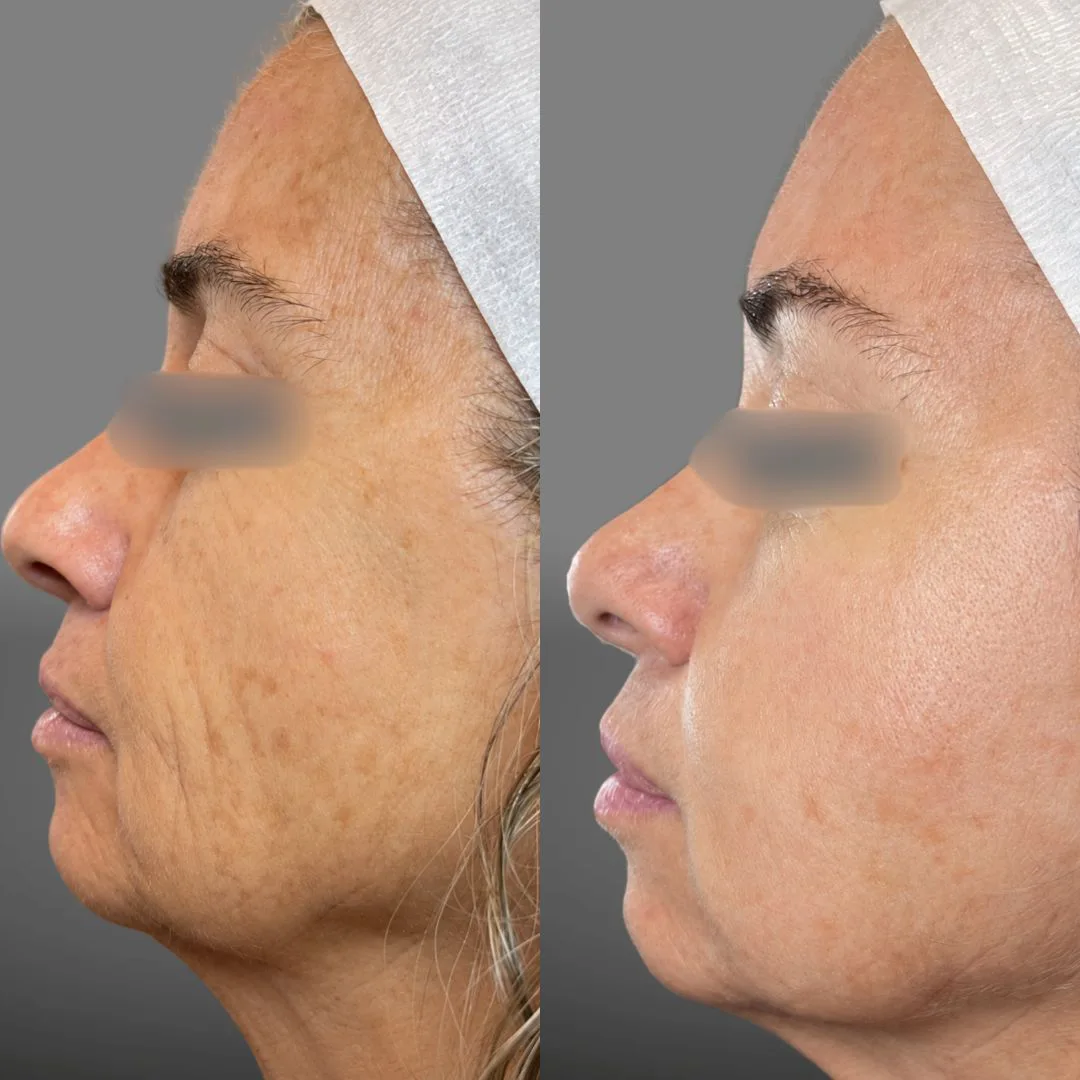
Fractional Laser Resurfacing for Fine Lines and Skin Quality
Skin quality changes gradually with age as collagen, elasticity, sun exposure, and other factors influence its structure. Fractional resurfacing can be used to address fine lines, textural irregularities, and structural skin quality through controlled thermal stimulation and subsequent remodeling.
The deeper 1550 nm wavelength may be particularly useful when wrinkles and texture are a priority. Collagen remodeling continues for approximately three months following treatment, which means improvement can continue after the initial redness and surface recovery have resolved.
For patients with concerns that extend beyond skin texture, fractional resurfacing can also be incorporated into a broader rejuvenation plan rather than being expected to address every component of facial aging on its own.
Fractional Laser Resurfacing After Weight Loss
Significant or rapid weight loss can reveal changes in skin quality that were less noticeable before weight reduction. While fractional resurfacing cannot replace surgical tightening when substantial excess skin is present, it can address concerns involving texture and skin quality at the skin level.
Elle Medical & Aesthetics already treats many patients who have experienced significant weight loss, giving Crystal experience evaluating the aesthetic concerns that can follow these changes. Fractional resurfacing can be incorporated alongside other collagen-stimulating options when appropriate rather than treating post-weight-loss skin as a single isolated problem.
The right plan depends on the degree of laxity, overall skin quality, anatomy, and the patient’s goals. Crystal can determine whether fractional resurfacing should be used alone or as part of a broader treatment strategy.
Benefits of Non-Ablative Fractional Laser Resurfacing
Fractional technology provides a controlled way to stimulate skin renewal without treating the entire skin surface at once. With two available wavelengths, Elle can further customize treatment according to the depth and type of concern.
Potential benefits include:
- Improves the appearance of acne scarring
- Addresses rough and uneven skin texture
- Softens the appearance of fine lines and wrinkles
- Targets selected brown pigmentation
- Improves visible sun-related skin changes
- Supports ongoing collagen remodeling
- Offers both deeper and more superficial treatment options
- Preserves untreated skin between microscopic treatment columns
- Allows both wavelengths to be combined when appropriate
- Provides a non-ablative alternative to more aggressive resurfacing procedures
- Incorporates continuous cool air during treatment for improved comfort
Results vary according to skin type, concern, treatment intensity, healing response, and the number of sessions performed.
Who Is a Candidate for Fractional Laser Resurfacing?
Fractional laser resurfacing may be appropriate for patients concerned with acne scarring, rough texture, wrinkles, brown pigmentation, sun damage, or changes in overall skin quality. Candidacy is determined by much more than the concern a patient wants to treat.
During consultation, Crystal reviews your health history, skin type, healing history, tendency toward keloid formation, isotretinoin use, medications, and whether pigment, texture, or another issue is actually driving the concern. These factors help determine which wavelength should be used or whether another technology would be more appropriate.
Skin tone is also an important consideration. Fractional resurfacing can carry a risk of post-inflammatory hyperpigmentation, particularly in darker skin tones. Crystal discusses this risk directly and may adjust the treatment plan, recommend pre-treatment, or choose another procedure when that provides a more appropriate approach.
What to Expect During Fractional Laser Resurfacing
Your Consultation
Your treatment begins with a full health history and skin evaluation. Crystal assesses skin type, healing history, keloid tendency, isotretinoin use, medications, and the characteristics of the concern you want to address.
She then determines whether the deeper 1550 nm wavelength, more superficial 1940 nm wavelength, or a combination is appropriate. In selected patients, Crystal may also combine IPL with one or both fractional resurfacing wavelengths during the same session when the treatment plan calls for addressing multiple components of skin aging or sun damage.
Your Treatment
Before laser treatment begins, topical numbing is applied for approximately 30 to 45 minutes. Once the skin is adequately prepared, the area is cleansed and treated in passes using the selected wavelength and settings.
Cool air is delivered continuously through the handpiece during treatment, providing an important comfort measure during a procedure that can otherwise feel intense. A full-face laser treatment takes approximately 30 minutes, although timing can vary depending on the wavelength, settings, and treatment plan.
Fractional Laser Resurfacing Recovery and Aftercare
After treatment, redness and a sunburn-like sensation are expected for approximately three to five days. Swelling is generally most noticeable during the first one to two days.
As the skin begins turning over, it may develop a rough, sandpaper-like texture before sloughing for approximately two to three days. It is important not to pick, exfoliate, or attempt to speed up this process. Patients should use a gentle cleanser and the moisturizer provided by Elle Medical & Aesthetics while avoiding active skincare ingredients during this initial recovery period.
Heat, sweating, and sun exposure should be avoided for three days. Makeup can typically be applied the following day. The 1940 nm wavelength may involve a somewhat longer recovery period than the 1550 nm wavelength when a moderate to severe amount of epidermal pigmentation is being treated.
When Will I See Fractional Laser Resurfacing Results?
The visible healing period is only the beginning of the skin’s response. As redness, swelling, and surface roughness resolve, improvements in texture and overall skin quality can begin to emerge.
Collagen remodeling continues for approximately three months following treatment. This means the skin can continue improving well beyond the initial recovery period and even after the final treatment in a recommended series.
Pigmentation and surface texture treated with the 1940 nm wavelength may follow a different visible progression than deeper textural concerns treated with the 1550 nm wavelength. Crystal will explain what to expect based on the specific treatment plan.
How Many Fractional Laser Resurfacing Treatments Will I Need?
The number of treatments depends on what is being addressed, the severity of the concern, the wavelength selected, treatment intensity, and how your skin responds.
Someone treating deeper acne scarring or structural texture may require a different series than a patient primarily addressing superficial sun damage and pigmentation. Crystal may also alternate or combine the 1550 nm and 1940 nm wavelengths as the treatment plan progresses.
Rather than prescribing the same number of sessions to everyone, Elle Medical & Aesthetics develops the treatment series around the patient’s skin and desired outcome.
Fractional Laser Resurfacing vs. Laser Skin Rejuvenation
Although both treatments can improve visible skin concerns, they serve different purposes. Fractional laser resurfacing creates microscopic columns of controlled thermal injury to stimulate renewal and remodeling. It is particularly useful when texture, acne scarring, wrinkles, and surface irregularities are priorities.
Laser Skin Rejuvenation is a broader treatment category that may be used when concerns such as overall tone, redness, pigmentation, or other visible signs of skin aging are more prominent.
Because many patients have more than one concern, Crystal may recommend a combination approach rather than forcing one technology to address everything.
Can Fractional Laser Resurfacing Be Combined With IPL?
For appropriate candidates, yes. Crystal may combine IPL with the 1550 nm wavelength, the 1940 nm wavelength, or both during the same session when multiple skin concerns would benefit from different technologies.
This can be particularly useful when pigmentation and broader photodamage occur alongside texture or structural skin concerns. IPL and fractional resurfacing work differently, so using them strategically can allow different components of the skin concern to be addressed within the same overall treatment plan.
Combination treatment is not appropriate for every patient. Skin type, pigment risk, treatment intensity, and healing considerations are reviewed before Crystal recommends performing these technologies together.
Fractional Laser Resurfacing vs. Microneedling
Both fractional laser resurfacing and Microneedling can be used to address skin texture and stimulate remodeling, but they create controlled skin injury in different ways.
Microneedling uses fine needles to create mechanical microchannels. Non-ablative fractional resurfacing uses laser energy to create microscopic columns of controlled thermal injury at selected depths. With Nordlys®, Crystal can further customize laser treatment using the deeper 1550 nm or more superficial 1940 nm wavelength.
Neither treatment is automatically the better option. Skin tone, scar characteristics, pigmentation risk, treatment goals, and recovery preferences all influence the recommendation.
Why Choose Elle Medical & Aesthetics for Fractional Laser Resurfacing in Lafayette, LA?
- Having two fractional wavelengths matters only when they are used deliberately. At Elle Medical & Aesthetics, Crystal Fontenot, ANP-BC, selects treatment depth according to the problem being addressed. The deeper 1550 nm wavelength can be used for scarring, wrinkles, and structural texture, while the more superficial 1940 nm wavelength allows her to focus on epidermal pigmentation and surface changes. When appropriate, both can be incorporated into the same treatment plan or session.
- The consultation also looks beyond the laser itself. Healing capacity, medications, nutrition, hormones, skin type, and previous healing patterns can all influence how the skin responds to controlled injury. These factors are reviewed before treatment rather than after a recovery concern develops.
- Elle also takes a thoughtful approach to patients with darker skin tones and those experiencing skin-quality changes following significant weight loss. If fractional resurfacing is not the appropriate option, Crystal will recommend a different treatment rather than trying to make one technology work for every patient.
Fractional Laser Resurfacing Frequently Asked Questions
What is the difference between 1550 nm and 1940 nm fractional laser resurfacing?
The primary difference is treatment depth and what each wavelength is intended to address. The 1550 nm wavelength works more deeply and is used for concerns such as acne scarring, wrinkles, textural irregularities, and structural skin quality. The 1940 nm wavelength works closer to the surface and is used for epidermal resurfacing, brown pigmentation, sun damage, and rough surface texture. Crystal may use one wavelength or combine both depending on your skin and treatment goals.
Is fractional laser resurfacing good for acne scars?
Fractional laser resurfacing can be used to improve the appearance of acne scarring and textural irregularities. At Elle Medical & Aesthetics, the deeper 1550 nm wavelength is typically selected when acne scarring and structural texture are the primary concerns. Scar type and depth matter, however, so Crystal evaluates the skin before determining whether fractional laser resurfacing, microneedling, or another treatment strategy is appropriate.
How long is the downtime after fractional laser resurfacing?
Patients can generally expect redness and a sunburn-like sensation for approximately three to five days, with swelling most noticeable during the first one to two days. The skin may feel rough or sandpapery and then slough for roughly two to three days as it turns over. Recovery can vary based on the wavelength and treatment intensity. The 1940 nm wavelength may involve somewhat longer downtime when treating a moderate to severe amount of epidermal pigment.
Can I wear makeup after fractional laser resurfacing?
Makeup is generally permitted the day after treatment based on Elle Medical & Aesthetics' post-treatment protocol. Patients should still follow all individualized aftercare instructions and avoid picking, exfoliating, or using active skincare products while the skin is recovering. A gentle cleanser and the moisturizer provided by Elle should be used during the initial recovery period.
Is fractional laser resurfacing safe for darker skin tones?
Skin tone is an important consideration because fractional resurfacing carries a risk of post-inflammatory hyperpigmentation, particularly in darker skin tones. Crystal evaluates this risk during consultation and discusses it directly with patients. Depending on the individual, she may adjust treatment parameters, recommend pre-treatment, or suggest a different technology when that provides a more appropriate risk-benefit profile.
How long does it take to see results from fractional laser resurfacing?
Initial changes may become noticeable as the skin completes its visible recovery, but collagen remodeling continues for approximately three months. As a result, improvements in skin texture and quality can continue developing well after the treatment itself. The timeline varies according to the wavelength, concern being treated, treatment intensity, and individual healing response.
How much does fractional laser resurfacing cost in Lafayette, LA?
The cost of fractional laser resurfacing depends on the treatment area, wavelength or combination of wavelengths used, treatment intensity, and the number of sessions recommended. Because Crystal customizes the procedure according to the patient's skin and goals, pricing is determined after consultation rather than using one universal treatment price. The Elle Medical & Aesthetics team will review the recommended treatment plan and associated cost with you before proceeding. Available payment or financing options can also be discussed at that time.
Invest in the Long-Term Quality of Your Skin
Fractional laser resurfacing offers more than a surface-level approach to skin rejuvenation. With both the 1550 nm and 1940 nm wavelengths available through Candela Nordlys®, treatment can be directed toward the depth where your specific concerns originate, whether the priority is acne scarring and deeper texture or sun damage and superficial pigmentation.
Visit Elle Medical & Aesthetics at 626 Verot School Rd, Suite B, Lafayette, LA 70508, or call (337) 651-9120 to schedule a consultation for fractional laser resurfacing in Lafayette. During your consultation, Crystal can evaluate your skin and determine which wavelength, combination, or alternative treatment best aligns with your goals.